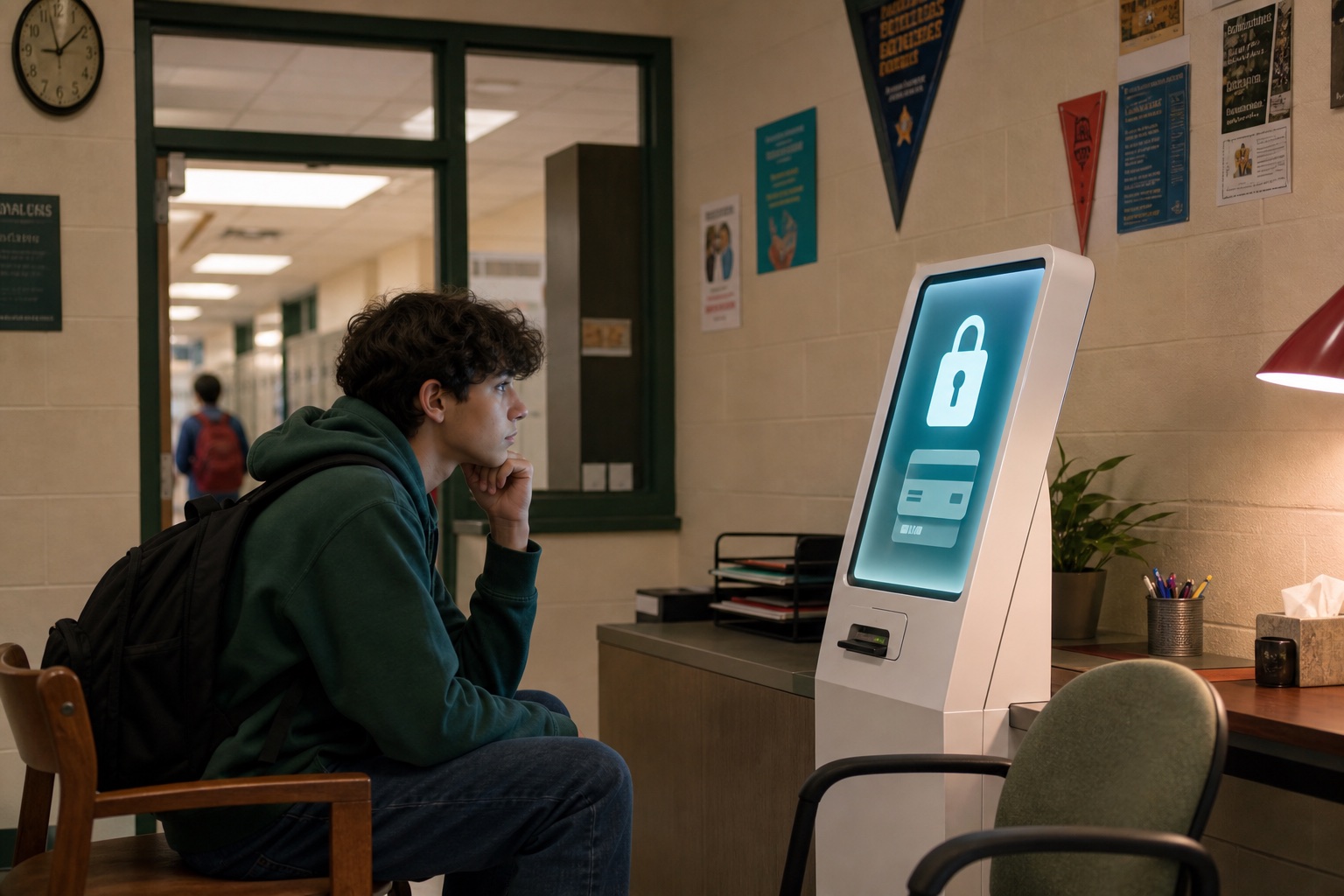
Cedar Glen Unified School District began the semester with 14 fewer counselors and 14 new Counselr+ kiosks, an artificial-intelligence support system that listens to students for up to 90 seconds before recommending the premium plan.
The kiosks provide free access to breathing animations, college-search advertisements, and the phrase “that sounds challenging.” For $8.99 a month, students may unlock advanced empathy, follow-up questions, and one emergency exclamation point per billing cycle.
“Every child now has immediate access to a scalable approximation of care,” said superintendent Dale Merritt, standing beside an unplugged kiosk during a ribbon-cutting ceremony. “And unlike human counselors, the platform never takes lunch, requests manageable caseloads, or points out that we spent its entire five-year budget on a one-year license.”
Sophomore Eli Navarro visited Counselr+ after struggling with classes and caring for a younger sibling. The kiosk thanked him for sharing, displayed a spinning heart for 18 seconds, and suggested he upgrade to Family Burden Pro.
When Navarro selected “I need to talk to a person,” the system offered a calendar slot with a customer-success representative in 11 business days. The representative's profile identified her as an AI.
The district's former counselors said the kiosks cannot write accommodation plans, intervene in crises, or notice when a student says “fine” while clearly not being fine. District officials responded that a future software update may add tonal concern, pending procurement.
Parents organizing against the program discovered that the district paid $4.2 million to EdVanta Labs, including $900,000 for a consulting report titled Human Connection at Machine Speed. The report's final page recommends reducing human connection to improve speed.
Teachers have begun directing students to the library, where laid-off counselors now volunteer twice a week beneath a handwritten sign reading BASIC EMPATHY — NO ACCOUNT REQUIRED.
At press time, Counselr+ had emailed Navarro a satisfaction survey and warned that failure to complete it could affect the quality of support he had not received.